The Economic Ripple Effects of GLP1
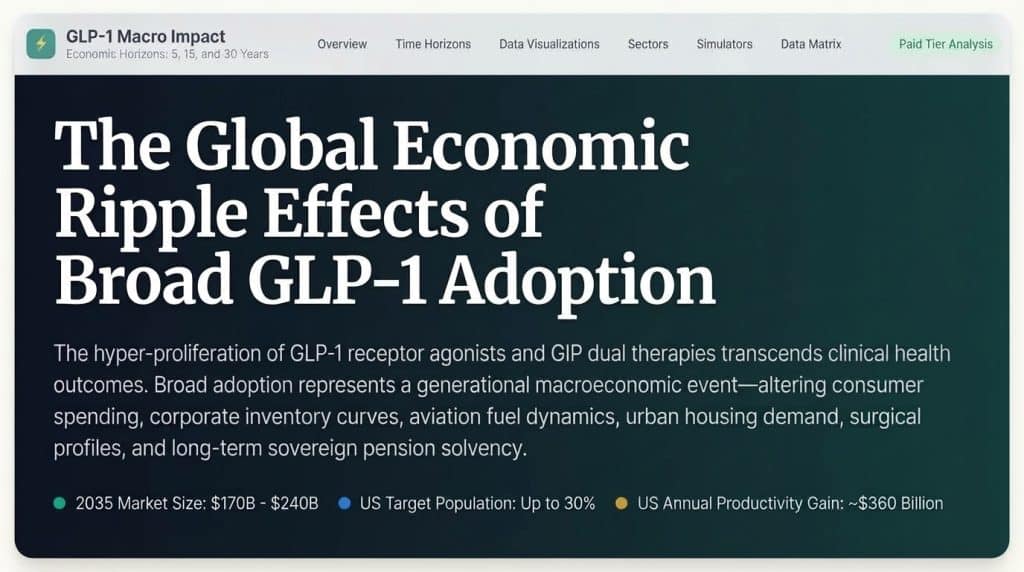
With the global GLP-1 market projected to exceed $100 billion by 2030, a new “GLP-1 economy” is taking shape. Consumer demand is shifting away from ultra-processed snacks, sugary sodas, and alcohol, with user households reducing grocery expenditures by 5% to 8%. Even the transport sector is feeling the shift: airlines estimate that reduced average passenger weight could save upwards of $500 million annually on jet fuel costs (don’t expect lower ticket prices though). Meanwhile, spending is increasing in sectors like fitness, clothing resale, and protein-rich nutrition.
Currently, users report a sharp drop in cravings for ultra-processed snacks, sugary beverages, refined carbs, fast food, and alcohol, shifting their dietary choices toward high-protein and nutrient-dense options. Grocery spending habits are reallocating purchases of chips, bakery goods, soda, and pre-packaged snacks are dropping, while spending increases on fresh produce, high-protein items, and specialized dairy products like yogurt, cottage cheese, and protein/whey supplements.
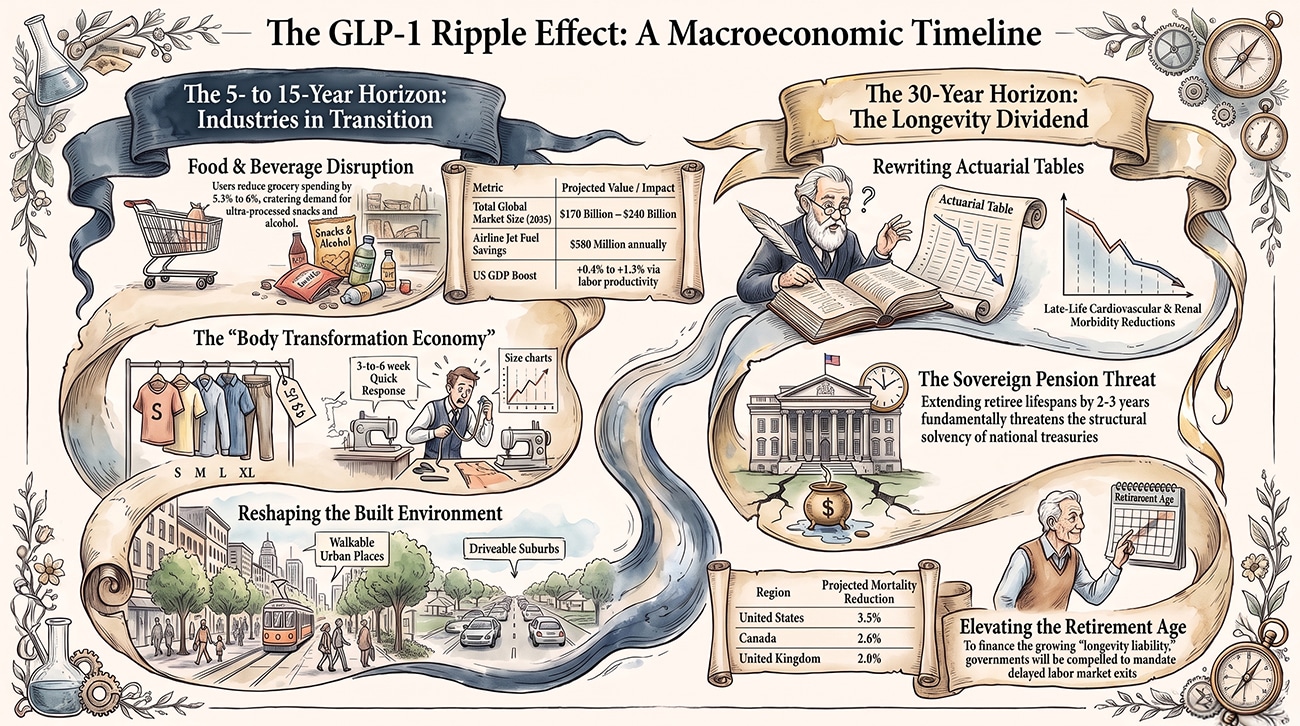
The restaurant and food-service sectors are experiencing declining sales, with fast-food chains, quick-service drive-thrus, and coffee shops feeling the strongest pressure.
Lower overall food consumption exerts price and demand pressures on major agricultural commodities. Farmers are facing reduced demand for corn, soybeans, sugar, beef, and high-fat dairy items like butter and cheese. Conversely, agricultural producers of fresh fruits, vegetables, lean meats, and dairy inputs used for high-protein products are seeing steady or expanding demand.
And GLP-1 users significantly cut back on alcohol purchases, with some studies noting reductions in alcohol consumption of up to 62% among users. Wine consumption has reduced by 20% over the last five years. The trends are staggering.
As millions of users lose weight, retail spending patterns are shifting in distinct ways:
- Surge in Resale & Thrift: Consignment and thrift store spending has risen sharply as consumers look for budget-friendly ways to update their wardrobes as they drop sizes.
- Impact on Traditional Retail: Retailers are seeing an uptick in online returns related to sizing issues and a higher volume of larger-size donations.
- Growth in Activewear & Wearables: Spending on activewear, fitness accessories, and wearable electronics (like smartwatches) has increased as users adopt more active lifestyles.

The effect of a single new drug, both healthwise and economically, is fascinating to say the least, but it what other ways does it affect our money:
- Job/Career- You’d better think twice about taking a job in a place that is being negatively affected by the new trends. Or even starting a new business. Thinking of opening a new fast food chain store? Or investing in a company stock of fast foods can bring unwanted results.
- Investing- What stocks are you invested in now that are being negatively affected? And what investments may you be able to take advantage of going forward? Restaurants, grocery stores, alcohol, tobacco, and manufacturers of processed foods are already making changes, to name just a few.
- Insurance- If you’re an employer, self-insuring your employees, you’re already feeling some pain bearing part of the cost of the drug. Insurance companies didn’t see this coming either, and the positive effects of better health helping offset the current cost won’t be seen for years.
This isn’t your great Granddaddy’s snake oil being sold here as these GLP-1s are the real deal and the effects are only going to grow globally. This is a new mindset, and mindsets are hard to develop and take time and effort. I know, I wrote the book “Our Mindset on Money” and I’m trying to help you understand the scope of how just one thing can change our spending habits and how we live our lives.
Want to learn more? Head over to our “Garage-Talk with Bill & PJ” podcast on YouTube and listen to our three-part series on GLP-1s’ to learn more about the health and financial effects of this wonder drug. Don’t forget to subscribe!
There are all kinds of books out there that tell you what to do with your money, or how to budget, but mine’s different in that it’s merely a conversation on what to expect in life financially, as you go through it. I even discuss how to prepare for those unexpected moments when “life happens”.
The book is a quick read, and the responses I’ve gotten range from it’s “life changing” to “even I learned something”.
But you have to make an effort, meaning you must go forward with intent, and decide it’s time to remove this fear that is an unhealthy emotion.
OUR MINDSET ON MONEY
It’s Easy to Control, So Why Don’t We?
Money controls most of us, and I’ve been wondering why we let this happen. This book dives into how we can gain control of our money and therefore enjoy more of what life really has to offer. It is not about what to do with each and every dollar we make as it is more about our relationship with it. Money affects us from birth to death and yet we’re taught that it’s taboo to talk about it.
And therein lies the rub, if you aren’t supposed to discuss it then how are you ever going to learn about it and take control? In these pages you’ll learn about the many financial challenges that you will face at some point in life, and you’ll be better off knowing what to expect and how you can then choose to deal with it.
In other words, how to take control. Facing Financial Fears.

There’s an old saying I believe in that states “If you want to understand what’s going on, then just follow the money.” Problem is, most of us can’t.
It’s not your fault, we’re not supposed to talk about it, and we’re not taught anything in school and rarely at home. As a financial advisor I learned that most spouses rarely talk about two things, money and sex. When I’m in front of groups I would say that I’m here to help you with one of those. But the reality is that if spouses aren’t talking about money, they certainly aren’t talking to their children about it.